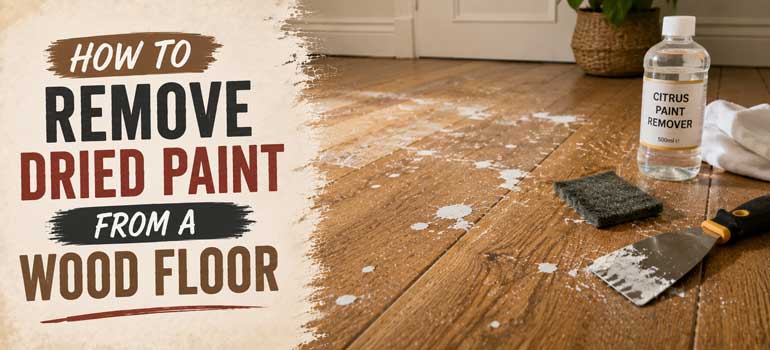
Dried paint on a wood floor is trickier to deal with than a fresh spill, mainly because it's often not obvious which type of paint you're dealing with, and the right removal method depends entirely on that. Getting it wrong risks damaging the finish underneath, so it's worth taking a moment to identify the paint before reaching for anything.
Why identifying the paint type matters first
Paint comes in a few broad categories, water-based, latex, and oil-based being the most common, and each responds to a different removal approach. Using the wrong method isn't just ineffective, it can actively damage the floor's finish, so narrowing down what you're dealing with before starting saves both time and risk to the floor.
Removing water-based and latex paint
Water-based and latex paints are the easier of the two categories to remove, and the method changes slightly depending on whether the paint is still wet or has fully dried.
| Paint condition | Removal method |
|---|---|
| Still wet | Wipe with a damp cloth and hot water |
| Dried | Soften first with a cloth soaked in hot water, then rub off once the paint turns liquid again with a damp, hot-water-soaked cloth |
| Stubborn dried patches | Use a hot, wet scrubber or sponge, with a small amount of vegetable oil on the scrubber to protect the surface and reduce the risk of scuffing |
Patience matters more than force here, softening the paint gradually with heat and moisture works better than scrubbing hard at a dried patch, which risks scratching the finish underneath.
Removing oil-based paint
Oil-based paint is considerably harder to deal with once it's dried, and it's worth being upfront about the limits here rather than promising an easy fix. If the paint is still wet, an appropriate paint thinner can lift it without much difficulty. Once it's dried, there's no way to remove it without some risk to the floor's finish, the two realistic options are carefully scraping the dried paint away or using a chemical product such as acetone-based nail polish remover. Both methods tend to leave a patch of distressed or dulled finish behind, even when done carefully.
Why oil-based paint removal often needs a repair afterwards
This is the part worth being honest about: once dried oil-based paint has been scraped or chemically treated off, the patch underneath rarely matches the surrounding finish anymore. Rather than living with a visibly dulled spot, this is exactly the kind of localised issue a wood scratch repair service can address, blending the treated area back into the rest of the floor without needing to refinish the whole room.
Preventing paint damage during future projects
If you're planning any painting or DIY work near a wood floor, a bit of preparation avoids this problem entirely. Covering the floor properly with a drop cloth or protective sheeting before painting starts, and cleaning up any drips immediately while they're still wet, is far easier than dealing with dried paint after the fact. This is worth remembering for future renovation projects, since fresh spills are considerably easier to manage than anything that's had time to dry and bond to the finish.
When to call in professional help
If a paint stain has left a noticeable patch of damaged or distressed finish, or if you're dealing with a large area rather than an isolated spot, professional attention is worth considering rather than continuing to work at it yourself. Wood floor sanding can fully reset a floor's surface where paint damage is extensive, giving a consistent finish across the whole room rather than a patchwork of treated and untreated areas.
If you've got a paint stain that's proving stubborn, or the finish underneath has been damaged during removal, get in touch and request a free quote and we'll assess what your floor needs.
Frequently asked questions
How can I tell if paint on my floor is water-based or oil-based? This isn't always obvious once dried, but water-based and latex paints generally soften more readily with hot water, while oil-based paint resists this and typically needs a thinner or solvent-based approach instead.
Is it always possible to remove dried oil-based paint without damaging the floor? Unfortunately, no, both scraping and chemical removal methods for dried oil-based paint tend to leave a patch of distressed finish, even when done carefully.
Can vegetable oil really help when scrubbing dried paint? Yes, a small amount on the scrubber helps protect the finish underneath and reduces the risk of scratching while working at a stubborn dried patch.
Should I try to remove dried paint myself, or go straight to a professional? Small, isolated water-based or latex paint spots are usually manageable on your own. Larger areas or dried oil-based paint are worth professional assessment given the higher risk of finish damage.
Can a patch of finish damaged during paint removal be fixed without redoing the whole floor? Often yes, a targeted repair can blend an isolated damaged patch back into the surrounding finish without needing to sand and refinish the entire room.