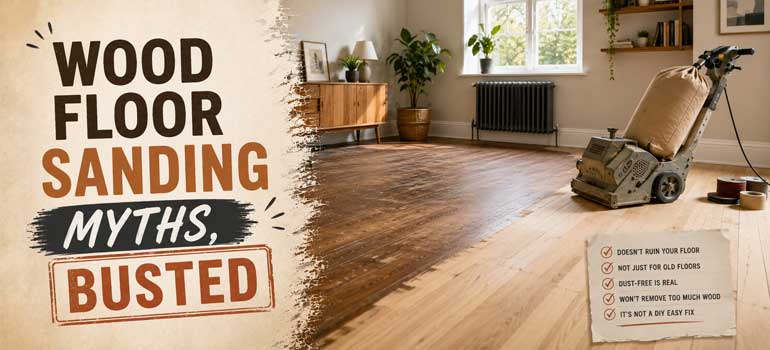
Wood floor sanding has grown steadily in popularity, and with that popularity comes a fair amount of misinformation, some outdated, some exaggerated, some just never true to begin with. Here are four of the most common myths, addressed honestly rather than oversold in either direction.
Myth: sanding is unbearably dusty
This one used to be largely true. Decades ago, sanding really did mean days of cleanup afterwards, with dust settling into every surface of the property. Modern dust-free extraction equipment has changed this significantly, capturing the large majority of dust as it's created rather than letting it spread through the room. That said, it's worth being accurate rather than overselling this: no equipment eliminates dust entirely, some fine dust still escapes extraction and settles, which is why professional sanders still seal off doorways, windows and gaps with plastic sheeting as standard practice, and why anyone doing DIY sanding should still wear a proper dust mask. The honest version of this myth-bust is that sanding is dramatically less disruptive than it used to be, not that it's dust-free.
Myth: you have to remove skirting and tape up the entire house
Full removal of skirting boards generally isn't necessary for a standard sanding job, professionals can usually sand right up to the skirting without needing to take it out. Where this myth goes too far is suggesting no preparation is needed at all: sealing doorways, vents and gaps with plastic sheeting is still standard practice, even with dust-free equipment, since it's what actually keeps the reduced dust contained to the room being worked on rather than spreading further. Whether windows stay open or closed is more a matter of preference and weather than a fixed rule, some professionals prefer them closed to help dust settle predictably, others ventilate lightly. Pets and children are generally fine to remain in the property during sanding, though keeping them out of the room being worked on directly is sensible given the noise and equipment involved.
Myth: anyone can sand a floor themselves
Sanding isn't an impossibly technical skill, but it does require real experience to get an even, professional-looking result. Uneven pressure leaves visible dips; missed spots leave old scratches showing through the new finish; and getting edges and corners right typically requires equipment most DIY rental kits don't include. A confident DIYer with patience and careful preparation can manage smaller, lower-stakes rooms reasonably well, but larger living spaces or floors with existing character worth preserving are where professional experience really pays off. The honest answer here is "possible for the right project, not universally easy," rather than either extreme.
Myth: walls always need repainting after sanding
A well-executed sanding job, particularly one using proper dust containment, shouldn't leave meaningful marks or scuffs on walls that would require repainting. That said, this depends on how carefully the job is done, and it's reasonable to check with whoever's doing the sanding what precautions they take around walls and skirting specifically, rather than assuming it's guaranteed regardless of the equipment or care taken.
Why getting these facts right matters
Believing sanding is either far worse than it actually is, or far easier and cleaner than it actually is, both lead to poor decisions. Overestimating the disruption might put someone off a service that would meaningfully improve their floor; underestimating it can mean skipping sensible preparation like dust sheeting or professional help when a project actually calls for it. An honest picture, sanding is considerably better than its old reputation, but still a real project worth preparing for properly, sets the right expectations either way.
If you're considering wood floor sanding and want a realistic picture of what to expect for your specific floor and property, get in touch and request a free quote and we'll talk you through the process honestly.
Frequently asked questions
Is dust-free sanding equipment actually completely dust-free? No, it significantly reduces dust compared to older methods, but some fine dust still escapes, which is why sealing off the room with plastic sheeting remains standard practice even with modern equipment.
Do I need to remove skirting boards before sanding? Generally no, professionals can usually sand right up to existing skirting without removing it, though this can vary depending on the specific condition and layout of a room.
Is it safe for children and pets to be in the house during sanding? Generally yes, though it's sensible to keep them out of the specific room being worked on given the noise and equipment involved.
Should I attempt DIY sanding on my own floor? It depends on the room and floor. Smaller, lower-stakes spaces are more forgiving of a DIY learning curve, while larger or more valuable floors often benefit from professional experience.
Will sanding definitely damage my walls or skirting? A carefully executed job with proper containment shouldn't cause meaningful damage, though it's worth confirming what precautions your specific contractor takes before work begins.