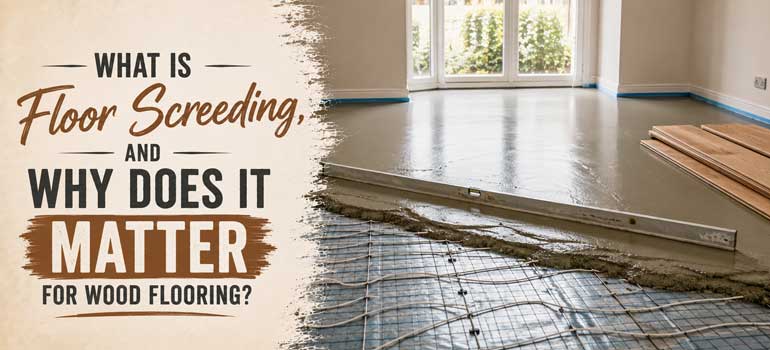
Most of the attention a wood floor gets is focused on what's visible: the species, the finish, the colour. But long before any boards go down, what's underneath matters just as much to the floor's long-term stability. A concrete subfloor that isn't level, dry or clean enough creates problems that surface later in the wood installed above it, and screeding is the process that gets a subfloor ready to support wood flooring properly.
What screeding actually is
Screeding means applying a carefully blended material to the floor base to create a solid, even surface capable of properly supporting the flooring installed on top. For a wood floor to remain stable for decades, the base beneath it needs to be flat, level and structurally sound, and where an existing concrete subfloor isn't flat or even, screeding corrects this before any wood is laid.
What the subfloor needs before installation
A concrete subfloor needs to meet a few specific conditions before wood flooring can go down on top of it:
- Level and even, since any unevenness in the base transfers directly into the finished floor above it
- Appropriately dry, with moisture content low enough that it won't be drawn up into the wood boards after installation
- Completely clean, free of dust, debris or residue that could interfere with adhesion or levelling
- Structurally sound, without cracks or weak areas that could compromise the flooring above
Skipping proper preparation at this stage doesn't just risk a slightly uneven floor, it can lead to boards that move, creak, or develop moisture-related problems well after installation is complete, by which point the fix is far more disruptive than addressing the subfloor would have been.
Types of screed used before wood flooring
Different screed types suit different situations, and the right choice depends on the specific subfloor and installation.
| Screed type | Characteristics | Typical use |
|---|---|---|
| Traditional sand and cement screed | Well-established, cost-effective, but slower to dry | Standard installations where drying time isn't a major constraint |
| Self-levelling screed | Flows to create an even surface with less manual labour | Subfloors needing precise levelling before flooring |
| Liquid (flowing) screed | Fast application, generally faster drying than traditional screed | Larger areas or projects on a tighter timeline |
A professional assessment of the specific subfloor is the best way to determine which screed type suits a given project, since factors like moisture, existing subfloor condition, and project timeline all affect the right choice.
Why quality matters more here than almost anywhere else
Two things are worth being firm about with screeding specifically. First, the quality of the screeding material matters significantly, this isn't a place to economise on cost, since a lower-quality screed can compromise the stability of everything installed above it for years to come. Second, screeding is generally a job for trained, experienced professionals rather than a DIY project, unless you have the specific expertise and confidence to take it on yourself. Getting screeding wrong is expensive to fix later, since it means lifting the flooring that was installed on top of it to correct the base underneath.
How screeding connects to the wood floor's long-term performance
A properly screeded subfloor isn't just about a smooth installation day, it directly affects how the floor performs for years afterward. An uneven or poorly prepared base can cause boards to flex, creak, or develop gaps prematurely, issues that no amount of good wood floor maintenance above the surface can fully correct, since the problem originates below the visible floor. Getting this stage right is a real part of what determines whether a floor lasts decades or develops recurring issues far sooner than it should.
If you're planning a new wood floor installation and want advice on subfloor preparation and screeding, get in touch and request a free quote and we'll assess what your specific subfloor needs before installation begins.
Frequently asked questions
Does every wood floor installation need screeding first? Not always, only where the existing subfloor isn't sufficiently level, dry or sound. A professional assessment can confirm whether screeding is needed for a specific project.
How long does screed need to dry before wood flooring can go down? This varies significantly by screed type, traditional sand and cement screed generally takes longer than liquid or self-levelling options, so timelines should be confirmed for the specific product used.
Can screeding be done as a DIY project? It's generally recommended for trained professionals, since getting it wrong is costly to correct once flooring has been installed on top, requiring the new floor to be lifted to fix the base.
Why does subfloor moisture matter so much for wood flooring? Excess moisture in the subfloor can be drawn up into wood boards after installation, leading to swelling, warping or other moisture-related damage that's difficult to reverse once it's occurred.
Is a more expensive screed product always worth it? Generally yes for this specific application, since the screed forms the foundation for everything installed above it, and a lower-quality product can compromise the stability of the finished floor for years.