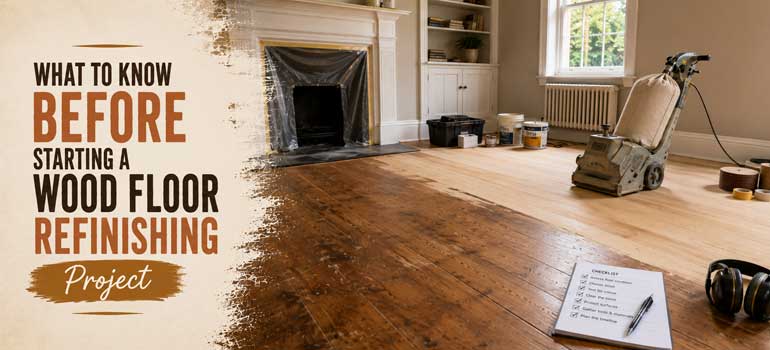
Solid wood flooring holds up well over the years, but eventually every floor loses its lustre, picks up scratches, or develops staining that daily cleaning can't shift. That's the point where refinishing becomes worth considering, and going in with a clear picture of what the project actually involves makes the whole process considerably smoother, whichever route you take.
Time
A proper refinishing project isn't something that happens overnight, and rushing it tends to show in the final result. Beyond the sanding and finishing itself, build in time for preparation: clearing furniture, cleaning the space, gap filling if needed, and protecting surrounding rooms from dust. It's worth being upfront with yourself about this before starting, since underestimating the timeline is one of the more common sources of frustration partway through a project.
Expertise
Refinishing requires real skill, training and experience to get right, it's not the simple job it can look like from the outside. Wood floor sanding and refinishing mistakes, uneven pressure, missed spots, poor grain direction, are hard to hide and harder to correct once finish has been applied over them. If you're not experienced and the idea of DIY sanding makes you nervous, hiring a professional contractor is the more reliable route, and it's worth being honest with yourself about your comfort level before committing to a DIY attempt.
Tools
Even a confident DIYer needs the right equipment, and skipping any of it tends to compromise the result.
| Tool or item | What it's for |
|---|---|
| Belt or drum sander with various sandpaper grits | Removing the old finish and levelling the surface |
| Edging sander | Reaching areas the main sander can't, along skirting and corners |
| Dust mask, eye and ear protection | Personal protection during sanding |
| Appropriate filler | Filling gaps before the final sanding pass |
| Bristle brush or applicator | Applying the finish evenly |
| Dust extraction or vacuum | Clearing dust between sanding stages |
Renting rather than buying most of this equipment is common for a one-off DIY project, but it's worth costing out properly, since hiring several separate tools can add up close to the cost of professional help.
Budget
Budget shapes almost every other decision in a refinishing project, from material quality to whether hiring a professional is realistic. Refinishing can be a costly undertaking either way, DIY still means paying for tool hire, sandpaper, filler and finish products, while professional sanding includes labour on top of materials. Setting a realistic budget before starting, rather than discovering costs as the project unfolds, avoids having to compromise on finish quality partway through to stay within reach.
Deciding whether DIY is right for this specific project
These four factors, time, expertise, tools and budget, aren't independent of each other, they interact. A tight budget might push toward DIY, but limited time or low confidence in your own skill level might make professional sanding the better trade-off even at higher cost. Small, low-stakes rooms are more forgiving of a DIY learning curve than a main living space or a floor with character worth preserving. Weighing all four together, rather than deciding purely on budget or purely on time, gives a more realistic picture of which route actually suits your specific project.
If you're planning a refinishing project and want to talk through whether DIY or professional sanding makes more sense for your floor and circumstances, get in touch and request a free quote and we'll give you an honest assessment either way.
Frequently asked questions
How long does a typical refinishing project actually take? This varies by room size and floor condition, but most residential projects take several days from sanding through to a fully cured finish, longer than many people initially expect.
Is DIY refinishing realistic for a first-timer? It can be for smaller, lower-stakes rooms with careful preparation, but larger or more valuable floors often benefit from professional experience to avoid visible mistakes that are difficult to correct.
Does renting tools for DIY refinishing actually save money? Sometimes, but it's worth costing out carefully, hiring a sander, edger, and other equipment separately can add up closer to professional pricing than expected.
What's the biggest budget mistake people make with refinishing? Underestimating the full cost, whether DIY or professional, by focusing only on the main sanding cost and forgetting materials like filler, sandpaper, and finish products.
Should time or budget take priority when deciding on DIY versus professional? Neither should be considered alone, weighing time, expertise, tools and budget together gives a more realistic picture of which approach actually suits your specific project.