Monday - Friday 07:30 - 17:30, Saturday 07:30 - 16:00
Floor Sanding and Finishing in Finchley
Back to Portfolio
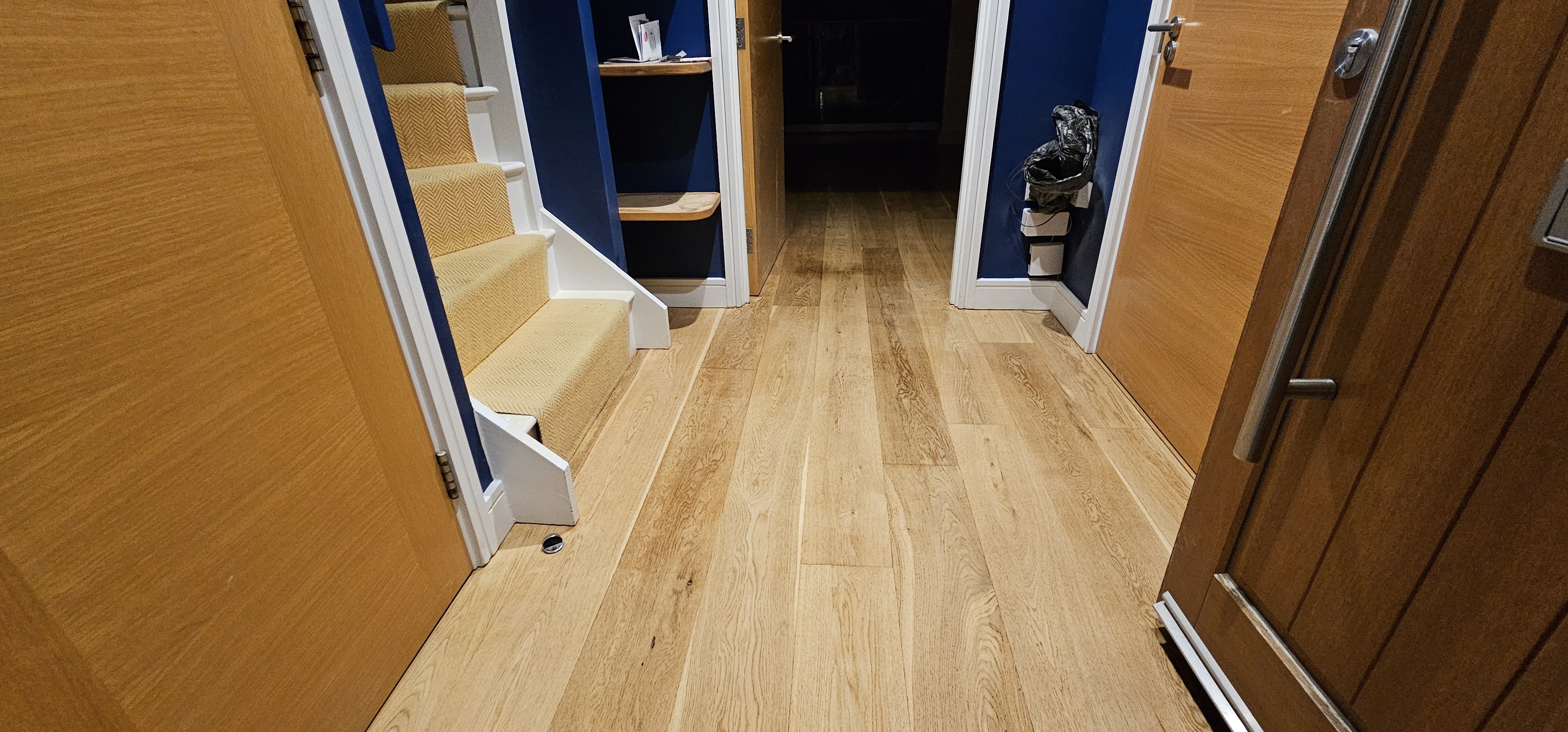
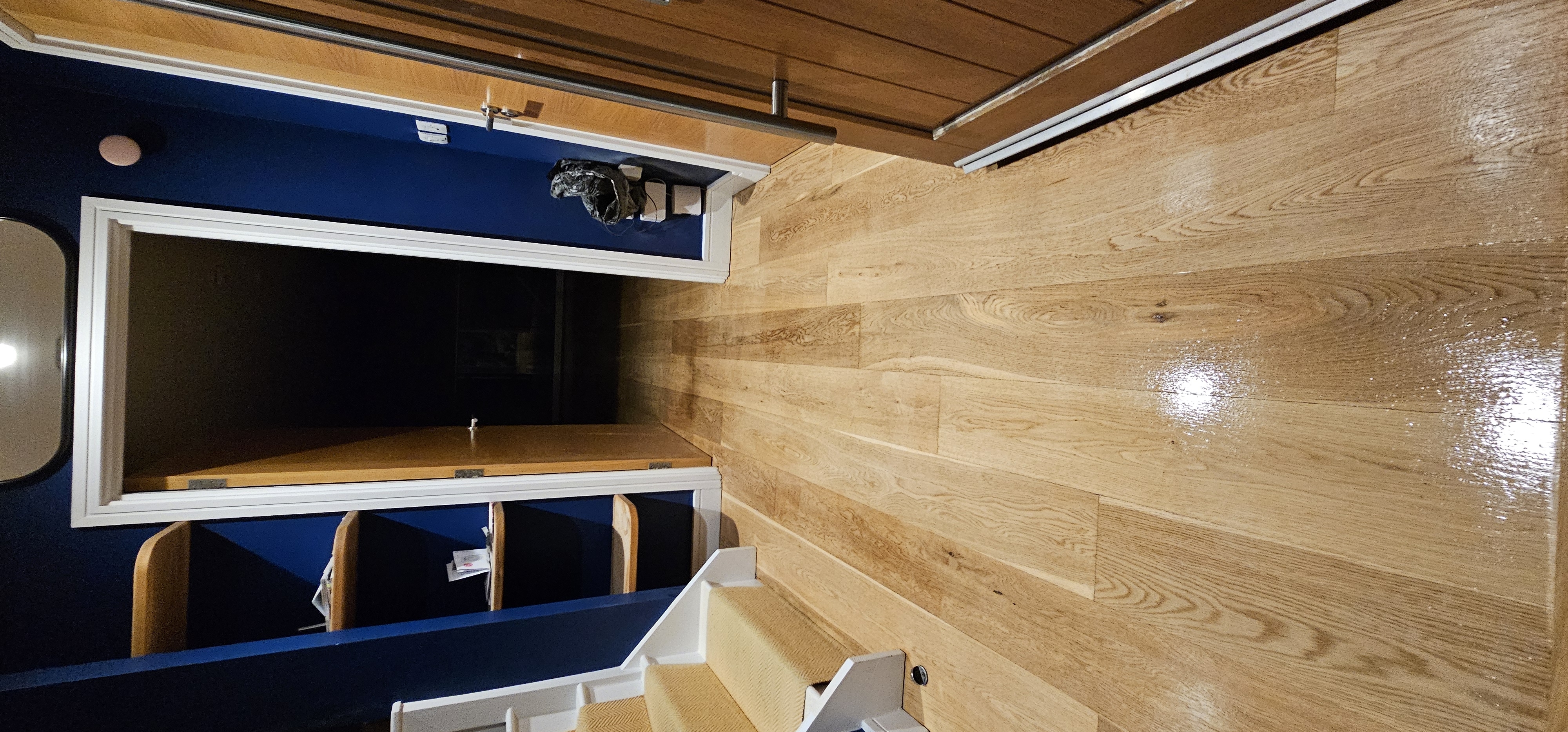
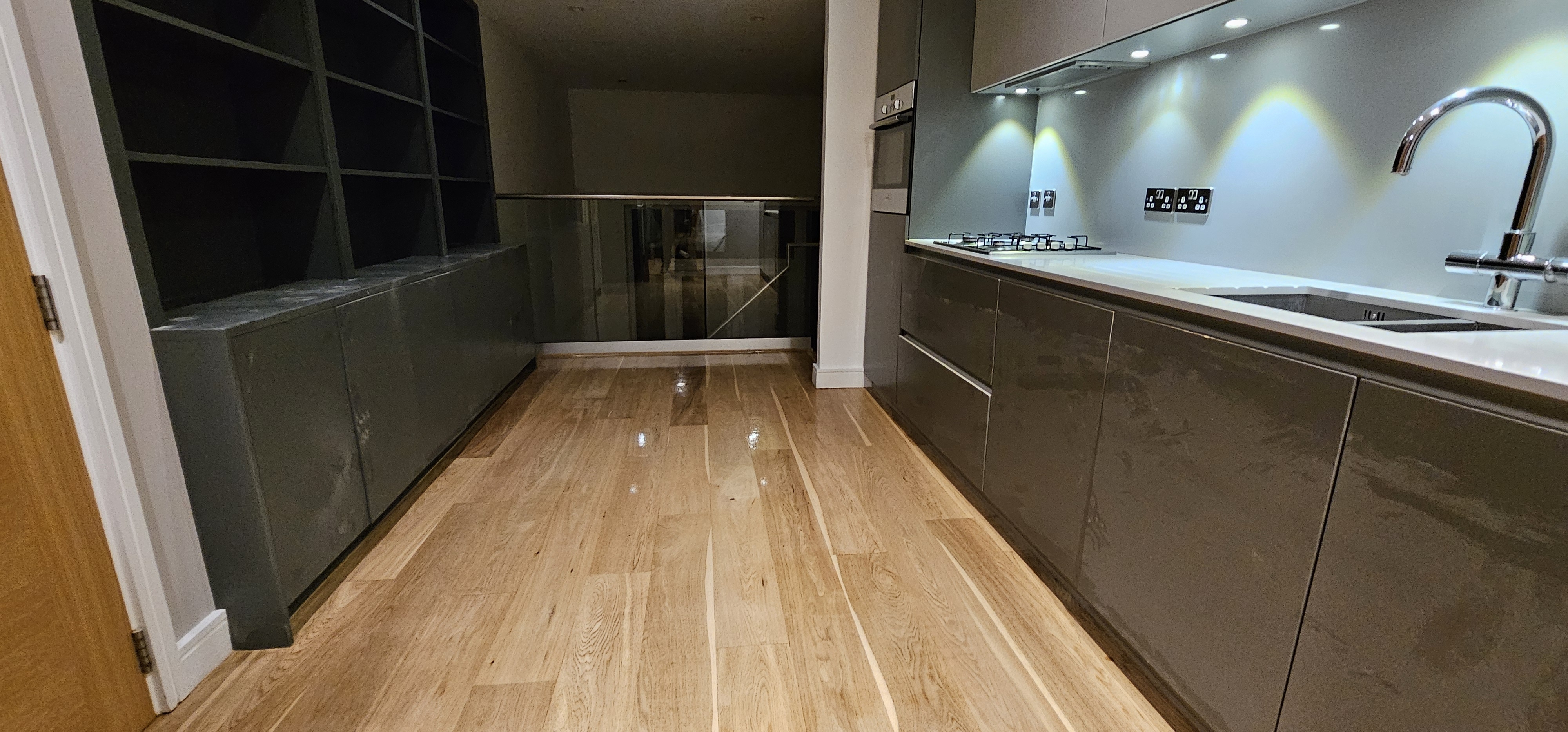
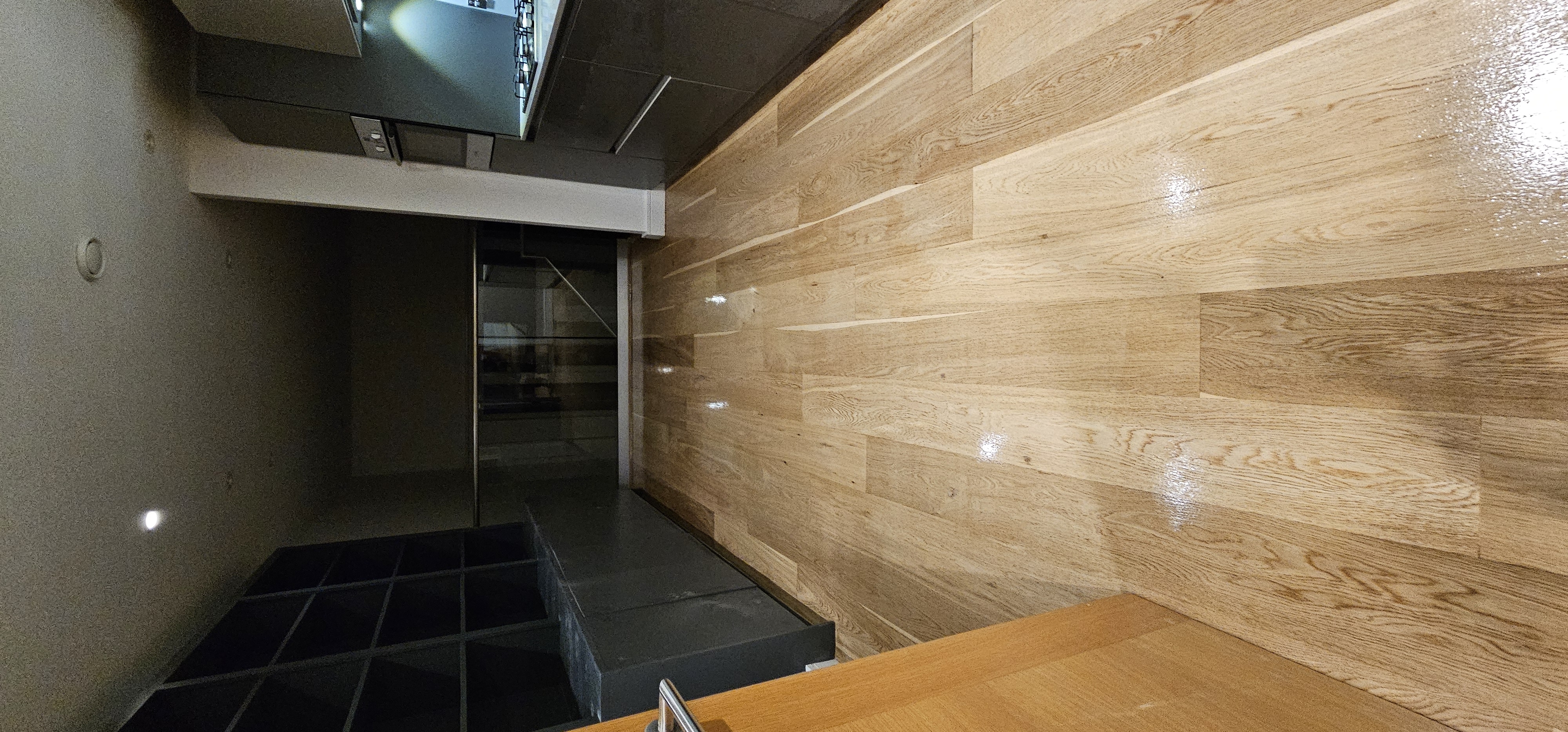
Floor Sanding and Finishing in Finchley
This Finchley property had original Victorian oak flooring that had spent decades under carpet. The owners wanted the wood restored to its natural finish, so we carried out a complete sanding and refinishing project across the ground floor. The work revealed beautifully figured grain that had been hidden for years.
Work carried out
- Three stage sanding process using 80, 120 and 180 grit paper
- Edge sanding and corner work throughout
- Dust containment and removal systems
- Gap filling where necessary
- Application of matt polyurethane finish
- Final inspection and touch ups
About the project
The ground floor consisted of around 65 square metres of oak parquet in the living areas, with additional narrow board flooring in the hallway. The wood had been well looked after under the carpet, but decades of sitting in darkness meant it had lost its colour and lustre. There were several gaps between boards, typical of Victorian properties that experience natural seasonal movement. We assessed the gaps and determined they were within normal range and didn't require intervention, though we did use a fine wood filler in a couple of spots where the gaps were slightly wider.
Our approach started with careful planning of the sanding schedule around the family's routine. We used a dust containment system throughout, which meant the work created minimal disruption to the rest of the house. The three stage sanding process took two days, then we applied the polyurethane finish in two coats, allowing proper drying time between applications. The whole job ran to five working days. We inspected every metre of the floor during and after each stage to catch any missed areas or surface imperfections before moving to the next grit.
About our Finchley service
Finchley has a mix of property types that we work on regularly, from Victorian terraced houses through to 1930s semis and some newer developments. The Victorian properties typically have either solid oak boards or parquet laid on timber joists, whilst the Edwardian and inter-war properties tend to have narrower pine or oak boards. We've also restored newer engineered wood and laminate floating floors in the newer builds, though sanding of engineered products requires different techniques and equipment.
We've worked across Finchley for many years and understand the particular conditions in the area. The properties here often have uneven subfloors due to age and settlement, which means we sometimes need to use different sanding techniques or fill small steps between boards. Damp isn't typically a major issue in Finchley compared to some other areas, but we always check moisture levels before starting work to ensure the wood is in the right condition. The local stone and clay soil means properties sit differently, and this affects how timber floors behave seasonally.
Frequently asked questions
How much does floor sanding cost in Finchley?
Floor sanding typically costs between £25 and £45 per square metre, depending on the condition of the wood, the number of grit stages required, and whether edge sanding or gap filling is needed. Parquet flooring usually costs slightly more than board flooring due to the extra time required for sanding the pattern evenly. We provide a detailed quote after assessing the floor condition.
How long does sanding take?
Most residential floors take between two and four working days to sand, depending on size and condition. Finishing (sealing or staining) adds another one to two days. In the Finchley property we worked on, the 65 square metres took two days to sand across all three grits, then two days for finishing. We schedule the work to minimise disruption, often starting in the morning and completing sanding before the family needs to use the space again.
Is the dust containment system effective?
Yes. We use industrial dust extraction connected directly to our sanding machines, which captures approximately 95 percent of dust at source. We also seal doors and use air filtration units in adjacent rooms. Whilst some fine dust is inevitable, our containment system means it doesn't settle throughout the house. Families can usually use other rooms normally whilst sanding is underway.
Project Gallery